
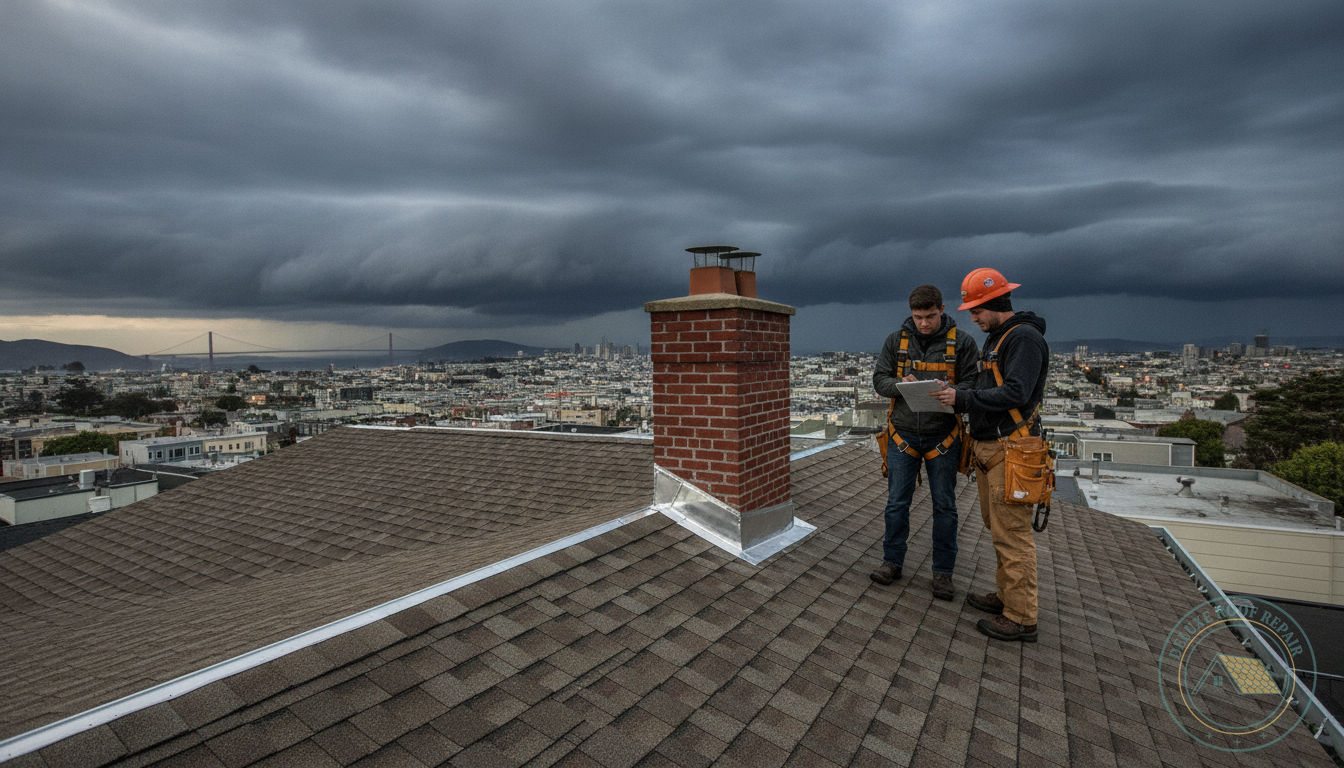
San Francisco's rainy season is not a gentle affair. Between November and March, the city can receive 20 inches or more of rain, much of it arriving in concentrated storm events driven by atmospheric rivers off the Pacific. A roof that handled the dry summer months without incident can develop a leak within hours of the first serious storm — especially if small vulnerabilities were left unaddressed. At Deluxe Roof Repair, we handle a significant surge in emergency calls every November from homeowners who wished they'd acted sooner. This checklist is designed to help you get ahead of the season before the rains arrive.
Step 1: Schedule a Professional Roof Inspection
Everything else on this list is more useful if you start with a clear, documented picture of your roof's current condition. A professional inspection identifies problems that are invisible from the ground: open flashing joints, cracked vent boots, lifted shingle tabs, blistering membrane sections, and ventilation deficiencies that trap moisture in the attic sheathing.
Our roof inspection service delivers a written report with photographs and a prioritized list of recommended actions — so you know exactly which repairs are urgent before the season starts and which can be monitored. We serve all San Francisco neighborhoods and can typically schedule inspections within the same week for active or pre-season concerns.
Step 2: Address Flashing at Chimneys, Skylights, and Vents
Flashing failures are statistically the most common source of roof leaks in San Francisco, and they are also among the most cost-effective repairs available. If your last inspection flagged any separation at chimney counter flashing, cracked lead pipe collars, or delaminated tape at skylight curbs — or if you've noticed ceiling staining near those locations — get those repairs done before the rains arrive.
San Francisco's seismic activity and thermal cycling work the flashing joints loose over time, and salt-laden coastal air accelerates corrosion at galvanized steel and aluminum components. Our roof flashing repair team uses materials matched to each specific application and re-points masonry joints where needed to create a lasting seal. Flashing repair typically does not require shingle or tile removal across large areas, making it one of the most targeted interventions available.
Step 3: Inspect and Clean Your Gutters and Downspouts
Clogged gutters are a leading cause of eave damage, fascia rot, and foundation water intrusion — all of which can be mistaken for roof leaks. Before the rainy season, clear all debris from gutter channels, flush downspouts to confirm they're flowing freely, and check that every section is pitched correctly toward its outlet. Water sitting in a sagging gutter section during a storm will overflow against the fascia board and eventually work under the drip edge.
If your gutters are pulling away from the fascia, showing visible rust or corrosion, or have cracked end caps and joints, our gutter repair and replacement service can address individual sections or replace an entire run with seamless aluminum in a profile appropriate to your home's architecture. Aluminum resists the salt-air corrosion that deteriorates galvanized steel gutters common on older San Francisco homes. Homeowners in coastal neighborhoods like the Outer Sunset should be especially attentive to gutter condition given the elevated moisture and wind exposure.
Step 4: Check Your Flat Roof Drains and Membrane Condition
If your San Francisco home or building has a flat or low-slope roof, pre-season preparation is especially important. Flat roofs cannot shed water the way pitched roofs do — they depend entirely on functioning drains, scuppers, and membrane integrity. Before the first storm, clear all debris from roof drains and scupper openings, and visually scan the membrane surface for open seams, blisters, or areas where the material has cracked or pulled back from the parapet wall.
If you observe ponding water that persists more than 48 hours after rain, blistering across sections of the membrane, or open laps where sheets have separated, those are repair-priority items. Our flat roof repair and coating service addresses all of these conditions, and an elastomeric coating applied to a structurally sound membrane can add a decade or more of service life. Property owners across the Mission, Castro, and Hayes Valley — where Edwardian flat-roofed buildings are most common — should make this inspection part of their annual pre-season routine.
Step 5: Assess Your Shingles for Visible Wear
From the ground or from a safe vantage point, look for shingles that are visibly curled, cracked, or missing. Check your downspouts after a dry period — granules accumulating in the gutter are a sign that your asphalt shingles are nearing the end of their protective mineral surface life. Lifted shingle tabs, especially on western exposures subject to wind-driven rain, should be re-nailed and sealed before the season's first storm gives them a reason to let water in.
If your roof is 20 years or older and showing granule loss across a significant portion of the surface, pre-season is also the right time to get a replacement estimate. A full shingle roof replacement done before the rains arrive is far less disruptive than an emergency response mid-storm. Our replacement crews can typically complete a single-family San Francisco home in one to three days, including new underlayment, ice-and-water barrier at the eaves and valleys, and all new flashings.
Step 6: Check Your Attic After the First Rain
Even after completing all pre-season steps, it's worth doing a brief attic check after the first significant rainfall of the season. Bring a flashlight and look for water staining on rafters or sheathing, dark wet spots on insulation, or any musty odor that wasn't present before. These are early indicators of a leak that hasn't yet made it to the ceiling below. Catching it at this stage typically means a straightforward targeted repair rather than a larger restoration job.
If you find evidence of moisture, our roof leak repair team uses systematic moisture tracing to identify the true entry point — not just the visible symptom — and applies lasting, code-appropriate repairs. We document all findings so you have a clear record for insurance or future reference.
Serving San Francisco and Nearby Communities
Deluxe Roof Repair provides pre-season inspections, leak repairs, flashing work, flat roof services, gutter repair, and full replacements for homeowners and property managers throughout San Francisco and surrounding areas. We also serve clients in Sausalito, Tiburon, Daly City, and Oakland. Our office is at 769 Monterey Blvd, San Francisco, CA 94127, and we're available Monday through Sunday from 8:00 AM to 6:00 PM.
Don't wait for the first storm to find out your roof has a problem. Call Deluxe Roof Repair at +1 (628) 888-6069 or email [email protected] to schedule your pre-rainy-season inspection today.
Discuss This With Our Team
Call +16288886069 or fill out our online form for a free, no-obligation quote.
Request Free Quote